
Quick answer
Yes, you can drive a rental passenger van to the Mauna Kea Visitor Information Station (VIS) at 9,200 ft. The route, Saddle Road (Hwy 200) to the paved Mauna Kea Access Road, is fine for our 15-passenger and 12-passenger vans.
No, you cannot drive a rental van to the 13,796-ft summit. The road above the VIS is unpaved, steep, and rental vehicles (ours included) are prohibited on it. Commercial summit tours in permitted 4WD vehicles are the legal way to reach the top.
9,200
ft, VIS elevation
13,796
ft, summit (off limits)
52
mi without gas
30–45
°F at VIS, after dark
The paved route up, step by step
From either side of the island, you end up on Saddle Road (Hwy 200, officially the Daniel K. Inouye Highway). Modern, two-lane, fully paved. See our Saddle Road tips if you're wondering whether it's safe (it is).
From Hilo (ITO)
- Head west out of Hilo on Hwy 200 (Saddle Road).
- You'll climb from ~200 ft to ~6,500 ft at the saddle in under an hour.
- Look for the Mauna Kea Access Road turnoff on the right, about 28 miles from Hilo.
- Paved access road climbs another 6 miles to the VIS at 9,200 ft.
From Kona (KOA)
- Hwy 190 south to Waimea, or Hwy 200 direct from Waikōloa.
- Eastbound on Saddle Road.
- Mauna Kea Access Road turnoff is on the left.
- Same 6-mile paved climb.
Fuel warning: there is no gas station on Saddle Road between Hilo and Waikōloa: roughly 52 miles. Top off before you start. Bring water and a snack bag for the group.
What the VIS is actually like
The Mauna Kea Visitor Information Station is a low-slung building at 9,200 ft, maintained by the Office of Mauna Kea Management. It's free. There are restrooms, a small exhibit area, and in the evenings a public stargazing program where they roll out telescopes.
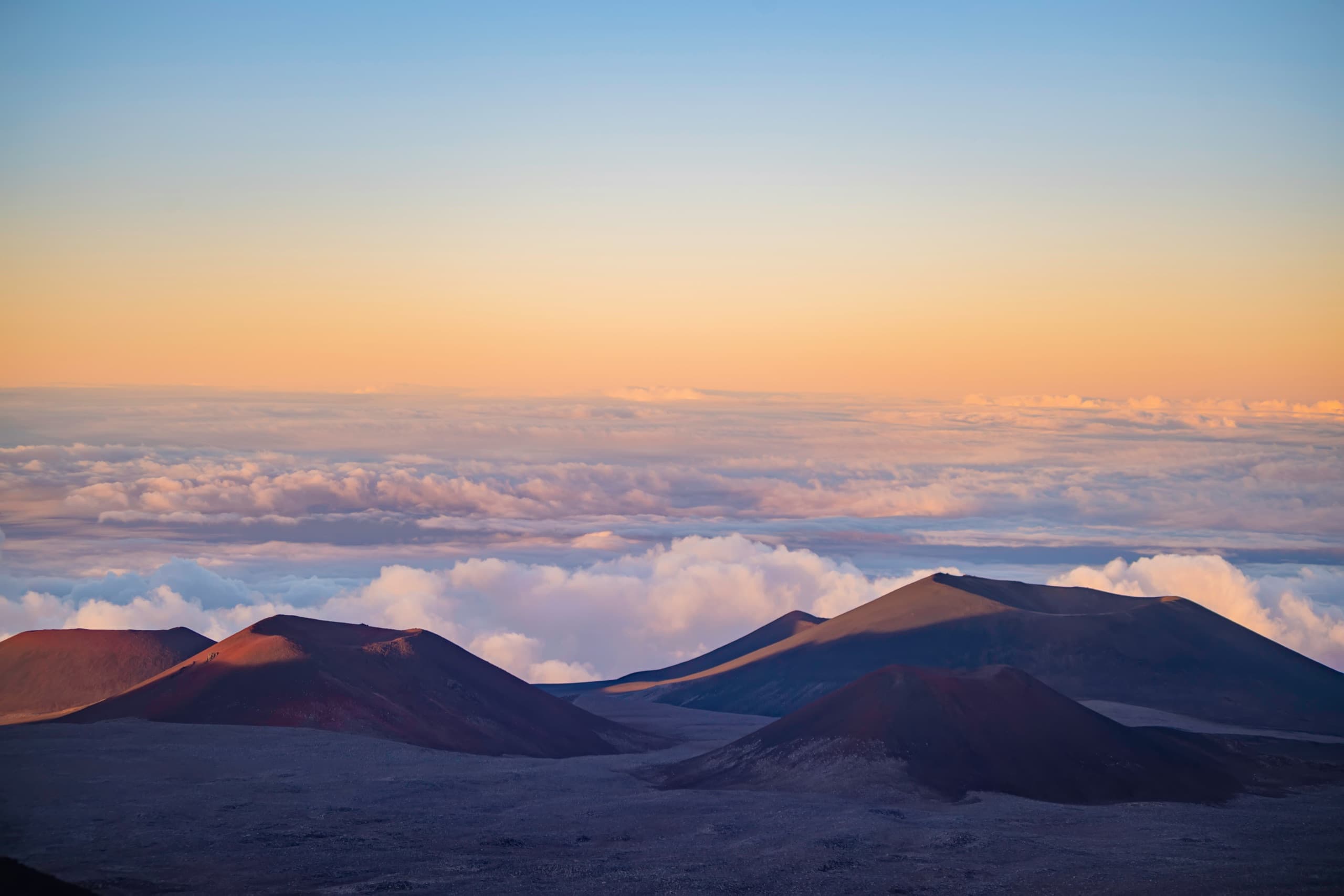
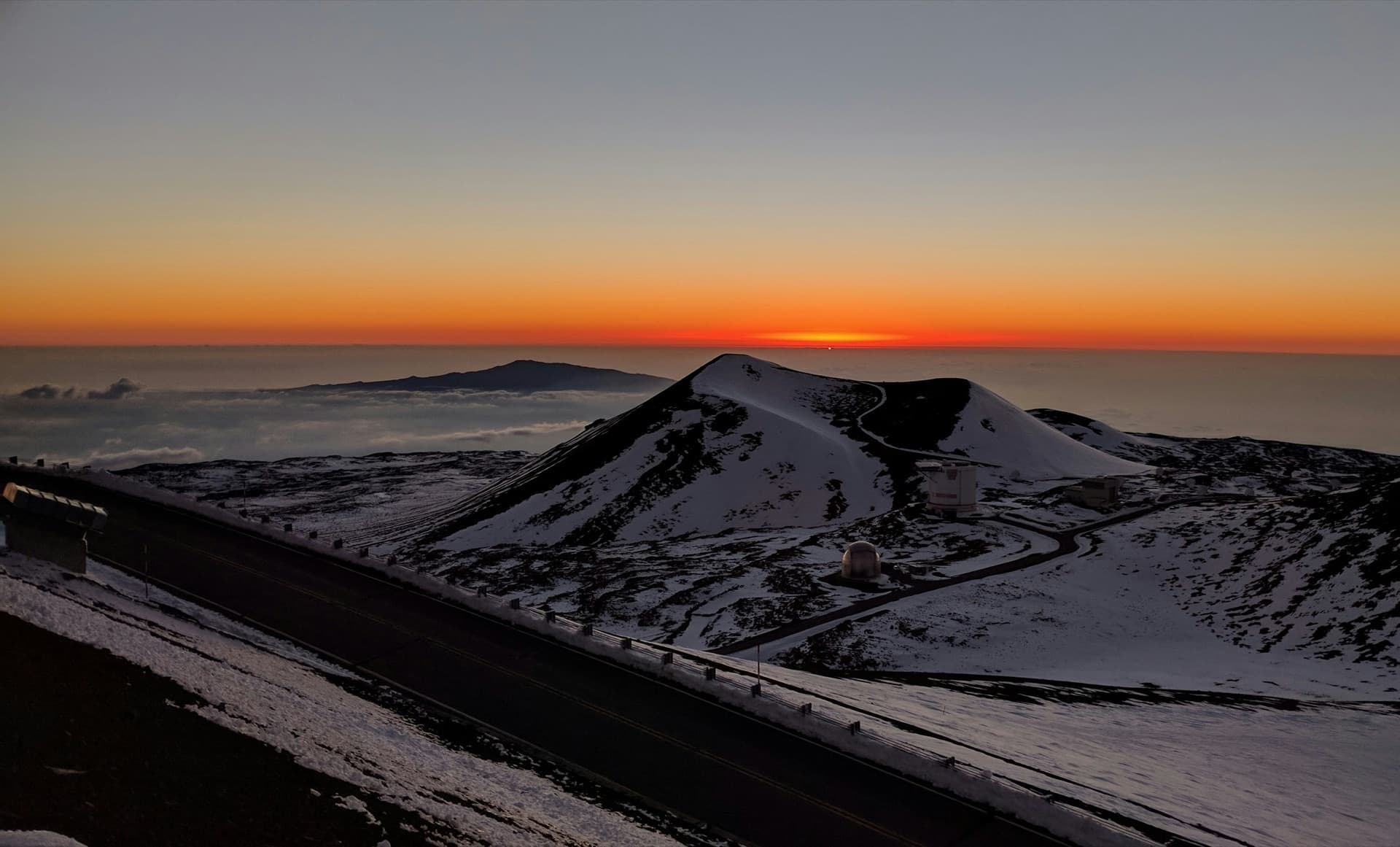
Outside, the light changes fast. You're above the cloud line most evenings, and the sunset is the point for a lot of visitors. After sunset the air cools hard and the stars come out like somebody flipped a switch. The Milky Way is visible to the naked eye on clear nights.
The altitude rule: read this
Going from sea level to 9,200 ft in ninety minutes is no joke. Altitude sickness is real. At the VIS, plan to stop for at least 30 minutes before doing anything strenuous, including loading the group back into the van to go higher (which, again, you aren't allowed to in a rental, but also you shouldn't).
Do not go above the VIS if you are:
- Under 16 years old
- Pregnant
- Have heart or lung conditions
- Have been scuba diving in the last 24 hours
Even at the VIS itself (9,200 ft), these groups should consult a doctor first. This isn't a suggestion. Low oxygen is cumulatively harder on these populations.
What to bring
- Warm layers. VIS evenings are 30–45 °F year-round. We're not kidding. People show up in flip-flops and regret it within ten minutes.
- Beanie, gloves, windbreaker.
- Closed-toe shoes. The lot is cinder, not pavement.
- Water. A liter per person. Altitude dehydrates.
- Snacks. There's no food up there.
- Red-light flashlight or red-film on your phone torch. Preserves dark-adapted vision during stargazing. Stargazers at the VIS will thank you.
- Full tank of gas. See above.
Why rental companies (ours included) forbid the summit
Three reasons, all real:
- The road is unpaved above the VIS. Switchbacks, loose aggregate, 15–20% grades in stretches. Rear-wheel-drive passenger vans aren't built for it.
- Brakes. On the descent, engine braking in a gasoline van isn't enough. 4WD tours use low range and often engine-braking diesel; rentals cook their brakes coming down.
- Insurance. Our rental contract, and every major rental agreement on the island, explicitly prohibits unpaved roads. A claim above the VIS is a not-covered claim, which means you pay for damage out of pocket.
See the full policy on the 15-passenger van page (it's the same for the 12).
If you want the summit, book a tour
Several licensed operators run sunset / stargazing summit tours out of Kona and Hilo. They use 4WD Mercedes-style tour vans, provide parkas, and handle all the permitting. Expect $250–$350 per person. Leave your rental at the VIS or at your lodging, not in the summit-shuttle lot, which is a different thing.
When to go
Year-round, but skip it if the forecast shows heavy cloud. The whole point is the sky. Check NOAA Mauna Kea weather the morning of. Winter brings occasional snow to the summit; VIS access can close in storms. Summer evenings are the most comfortable temperature-wise (still cold) and the clearest skies.
Sunset is the consistent highlight, so plan to be at the VIS 30 minutes before sunset to acclimatize with a view.
Mini-FAQ
- Can you drive a rental van to the summit of Mauna Kea?
- No. The road from the Visitor Information Station (9,200 ft) to the 13,796 ft summit is unpaved, steep, and 4WD-only. Virtually every rental-vehicle contract in Hawai'i (including ours) prohibits driving above the VIS. If you want to reach the summit, book a commercial summit tour in a permitted 4WD vehicle.
- Is 4WD required to reach the Mauna Kea Visitor Information Station?
- No. The route to the VIS is fully paved: Saddle Road (Hwy 200 / Daniel K. Inouye Hwy) to Mauna Kea Access Road. Any rear-wheel-drive passenger van, including our 12- and 15-passenger vans, can make the trip. Drive with headlights on and watch for fog.
- How long is the drive to the VIS from Hilo?
- About an hour to an hour and fifteen minutes each way from Hilo (ITO), depending on your stops on Saddle Road. Hilo is roughly 2,600 ft lower than the VIS, and the Mauna Kea Access Road climbs steadily for the last 6 miles.
- How long is the drive to the VIS from Kona?
- About 1 hour 30 minutes from Kailua-Kona or the Waikōloa resorts. Go Saddle Road eastbound to the Mauna Kea Access Road turnoff. No gas between Waikōloa and Hilo, so fuel up before you start.
- What temperature is it at the Visitor Information Station at night?
- Expect 30–45 °F at night, year-round, even in summer. Bring a beanie, a warm jacket, and closed-toe shoes. The air is also thinner and drier, which amplifies the cold.
- Do you need reservations to visit the VIS?
- No reservations are needed for the VIS or its evening stargazing program. Access schedules can change, so check the Mauna Kea Observatories site (mkoa.ifa.hawaii.edu) or the Hawai'i DLNR page before you go.